

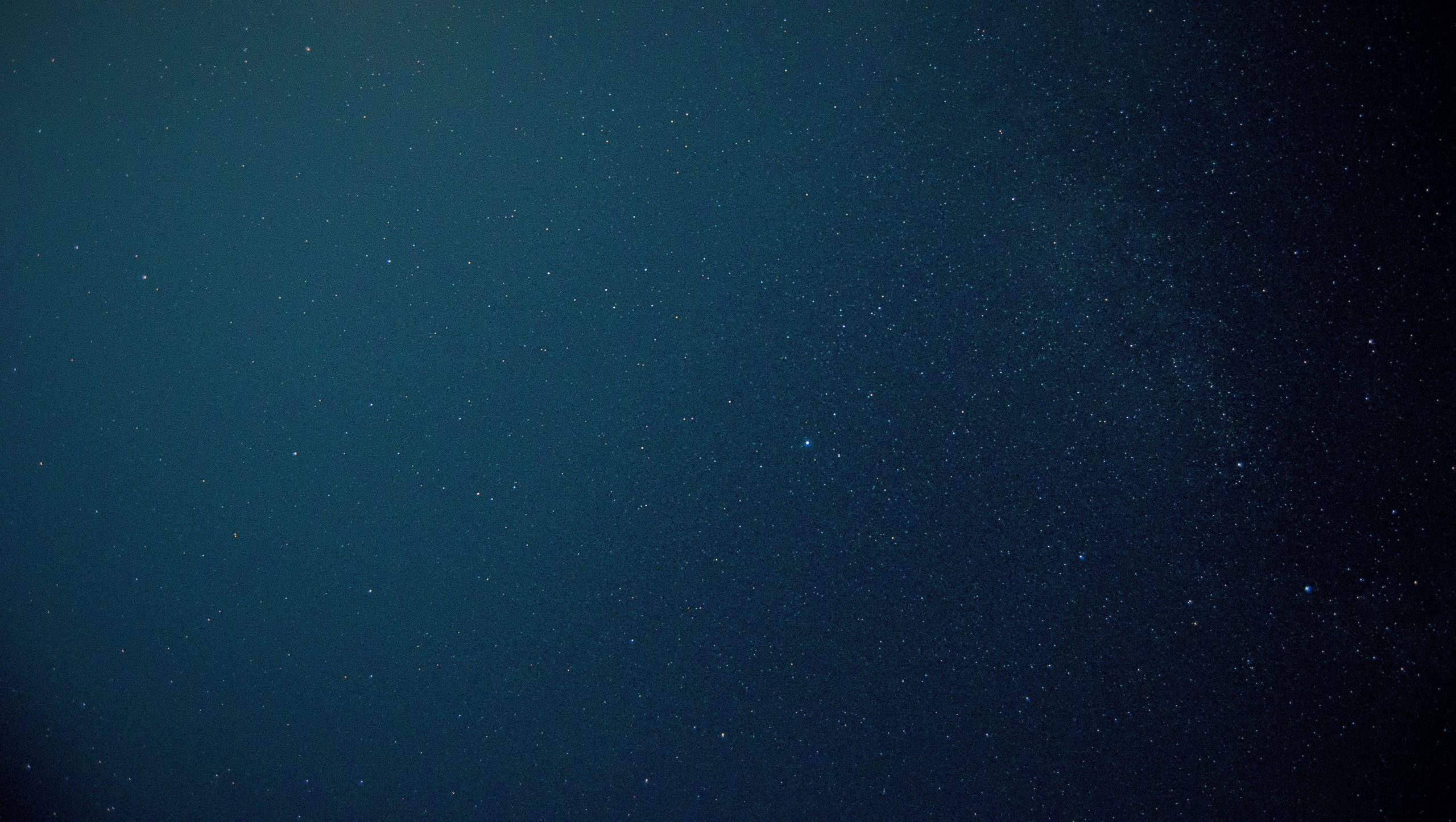
Astro tourism blasts off in New Zealand
Ancient civilisations worshipped the stars, explorers used them to navigate unchartered waters, Van Gogh captured them on canvas, Coldplay penned lyrics about them and people wake up to check their star sign’s astrological fortunes every day.
The night sky, with its glittering galaxies, has long held both mystery and scientific fascination. It has captured imaginations, inspired research and discovery, and fostered a love of star-gazing the world over.
But as light pollution diminishes the view of the night sky for up to half the world’s population, astro-tourism has become a growing trend.
And there’s nowhere better to star gaze than in New Zealand.
With clear skies, minimal interference from artificial light, hardly any smog and many accessible vantage points you really don’t get better star-gazing opportunities than here.
There are even some constellations and formations that can only be seen at a southern latitude, including the Southern Cross and its lesser known associated features, the Jewel Box and Coal Sack, the Large and Small Magellanic Clouds and the ethereal Southern Lights or Aurora Australis.
Viewing these and others from New Zealand is virtually unsurpassed, unless you head to San Pedro de Atacama in Chile, or the South Pole, which is less accessible and a bit chilly!
New Zealand’s connection with the stars dates right back to its discovery.
Around 700 years ago, the stars guided migration by Polynesian people in traditional canoes, or waka, across the Pacific, following in the footsteps of the legendary explorer, Kupe.
Fast forward to the present day and the Southern Cross star formation still lies dear to Kiwis’ hearts and features on New Zealand’s flag, despite a recent close call during the National Flag Referendum.
The five main stars of the Southern Cross belong to a larger group officially known as the constellation Crux. Crux is the smallest constellation in the sky and yet is the most famous group of southern stars.
It is a kite-shaped cluster of four bright stars (and one not so bright) all within 16 degrees of each other in the sky. In the course of 24 hours the Cross appears to make a complete circuit in the heavens around a point known as the South Celestial Pole. At the mid-point of the line extending from the long axis of the Cross to the bright star Achernar one can ascertain the direction south.
The Southern Cross fame is boosted by appearing on four national flags: New Zealand, Australia, Western Samoa and Papua New Guinea.
Many a homesick Kiwi traveller has looked to the Northern Hemisphere heavens and missed the dearly familiar Southern Cross.
Southern New Zealand skies for star-gazing
New Zealand’s skies consistently rate as one of the world’s top 10 star-gazing locations and some of the most renowned celestial views are above the country’s Southern Alps. This area encompasses Aoraki Mt Cook National Park, MacKenzie Country, and the villages of Twizel, Tekapo and Mt Cook.
This 4,300 square km region has been declared an International Dark Sky Reserve with a gold rating. Known as the Aoraki MacKenzie Dark Sky Reserve, it is the world’s largest, indicating just how little light pollution there is in this part of the country.
Within the reserve, Lake Tekapo, and the surrounding areas is the best for star-gazing.
The small village of Tekapo, with less than 500 permanent residents, is three hours’ drive from Christchurch airport.
It’s nestled within a cluster of peaks, including Mt Cook, which helps to keep low cloud away and makes the night sky more stable, clearer and sharper.
For the last 30 years the region has used special shields and lightbulbs to point street light downward to reduce light pollution and preserve the night sky.
There are several options here (or close to) to make the most of this awesome star-gazing site.
Mount John Observatory has been described as “one of the best star-gazing sites on earth” by Executive Director of the International Dark Sky Association, Bob Parks.
By day, you can hike or drive to the summit where you’ll see stunning views across the MacKenzie basin, and it’s possible to view day-time stars, sun and planets using the observatory’s powerful telescopes.
The organisation Earth and Sky works closely with the Observatory and the University of Canterbury and runs tours at the observatory both during the day and night, where experienced guides take visitors through an introduction and exploration of the sky.
Transport, equipment and guidance are provided, but bring warm clothes and, if you can, a DSLR camera for capturing some amazing night sky shots.
Tekapo Starlight also offers “naked-eye” guided tours departing nightly from the town – this means staring skyward without the use of telescopes or binoculars. This means you have a wider view and can see how constellations relate to others, with the help of a guide of course!
As well as star-gazing, Tekapo and the surrounding area has a great variety of visitor attractions that makes it well worth exploring if you’ve got a few days.
Hot Springs, tramping, horse-trekking, hunting and golf are just some of the options.
Star Gazing Tours Twizel operates from the neighbouring village of Twizel and takes small groups out of town to experience the vastness of the Mackenzie District sky at night. Being 100 per cent away from any settlement provides a light free night experience where guides use astronomy grade laser pointers to take people on a tour of the heavens.
At the Sir Edmund Hillary Alpine Centre just 20 kms north in Mount Cook Village there is a full dome digital planetarium with a 3D theatre for virtual tours of space as well as a visual and educational orientation offered prior to real-time tours.
If you’re holidaying in the Queenstown region another chance to see the stars is at the Queenstown Skyline.
High above the bustling resort town, visitors can take the gondola up to Bob’s Peak, 450 metres above Lake Wakatipu below. Here there is a special viewing area for a guided tour of the night sky, while the lights of the town twinkle below.
The Queenstown region is also the busiest tourism destination in the South Island so there’s plenty to do apart from staring heavenward!
North Island Star Gazing
If you are not heading south, New Zealand’s North Island also has a fair share of excellent star gazing spots.
Rotorua has become one of the most exciting tourist destinations in New Zealand for good reason, with its range of adventure, leisure, sporting, outdoor and cultural activities.
Similar to Queenstown there is a Skyline Rotorua Stargazing, with visitors being taken up to the top of Mt Ngongotaha, where “The Don” telescope provides a view 2586 times better than the naked eye.
The Skyline experience isn’t limited to looking up at stars – it also offers the must-do Luge, part go-kart, part-toboggan downhill along a concrete track before being taken back up to the start on the gondola – a little like the Winter Olympic luge but without ice and warmer!
There’s also mountain biking, a zipline, the monstrous Skyswing out across the valley and after all that there are restaurants and cafes to relax after your adrenaline fill.
The country’s capital Wellington has the Space-Place in the Carter Observatory, which is at the top of the cable car, New Zealand’s only running historic cable car or funicular railway, that rises 120m over 612m high above the City. The observatory is a short walk from the Wellington Cable Car summit station in the Botanic Gardens, Kelburn.
This is New Zealand’s longest serving national observatory, established in 1937. It runs a host of full dome planetarium shows – many suitable for young children, as well as guided telescope viewings.
About 80 kms north of Wellington, is probably one of the most unusual astronomical sites in New Zealand, if not the world.
Being creative Kiwis, the Wairarapa’s Phoenix Astronomical Society has built a practical open-sky observatory called Stonehenge New Zealand and inspired by its namesake in England.
Built on a similar scale but with modern design, Stonehenge Aotearoa looks to rediscover the ancient knowledge of navigation, seasons, time and the calender as well as educating through lectures on astronomy, legends and star/space history.
Auckland also has a very popular observatory, called the Stardome, in Cornwall Park, six kilometres south of downtown.
The Stardome has a wide range of activities all year around including planetarium shows, an interactive space gallery, seasonal star shows as the skies change, and introductions to telescopes, as well as some interesting astronomical exhibits. Especially popular in winter time when nights are longer, it is worth booking ahead.
And finally, the popular tourist region of the Coromandel, east of Auckland, is the location of Stargazers, near the town of Whitianga, where there’s accommodation and an observatory.
About 2.5 hours from Auckland, this is more of a personal experience with the host Alistair Brickell being an amateur astronomer, as well as a professional geologist.
Stargazing tours are free if you stay for two nights or more, with a small fee charges for other visitors. The 3.5m solar powered rotating observatory has a range of telescopes to try.
Star gazing is for all
Whether the romantic side of star-gazing is your thing, or you have a more technical interest in the night skies, you’ll enjoy New Zealand’s astro-tourism as a special experience.
Keep in mind though, if you get the right night (which is not too hard in this neck of the woods), all you need to do is step out your door and look skyward for a spectacular night-sky experience.